
Published: 22 September 2026Last reviewed: 22 September 20269 min read
Would you rather rent than buy?Use our aerial platform rental directory: 87 companies across Portugal, with a map, a filter by machine type and indicative prices.See rental companiesIn short: if you need to go straight up, on a flat surface, with room for materials and several people, the answer is almost always a scissor lift. If there is an obstacle in the way (a canopy, a wall, racking), you need an articulating boom. If you need a lot of horizontal reach or a lot of height, it is a telescopic boom. For tight indoor spaces there are vertical mast lifts; to get where nothing else fits, spider lifts; for quick jobs on the street, truck- and van-mounted platforms. The telehandler is something else: it lifts loads, and only lifts people with an approved work basket.
How they are classified
Under the European standard EN 280, and its international equivalent ISO 16368, mobile elevating work platforms (MEWPs) are grouped in two ways:
By where the platform can go (group):
- Group A: the platform rises within the machine's footprint (scissors and vertical masts).
- Group B: the platform can move outside it (every boom lift).
By how it travels (type):
- Type 1: travels only when stowed.
- Type 2: travels elevated, controlled from the chassis.
- Type 3: travels elevated, controlled from the platform. Most construction machines are type 3.
These classes are where the IPAF PAL operator card categories that sites ask for come from: 1a (static vertical), 1b (static boom, such as truck- and trailer-mounted), 3a (mobile vertical: scissors and masts) and 3b (mobile boom: articulating and telescopic). An operator with 3a is not qualified for an articulating boom.
Two figures appear on every spec sheet and should not be confused: platform height (to the basket floor) and working height, which is the first plus 2 metres, the reach of a person with an outstretched arm. When someone says "I need a 12-metre one", check which of the two they mean.
Scissor lift
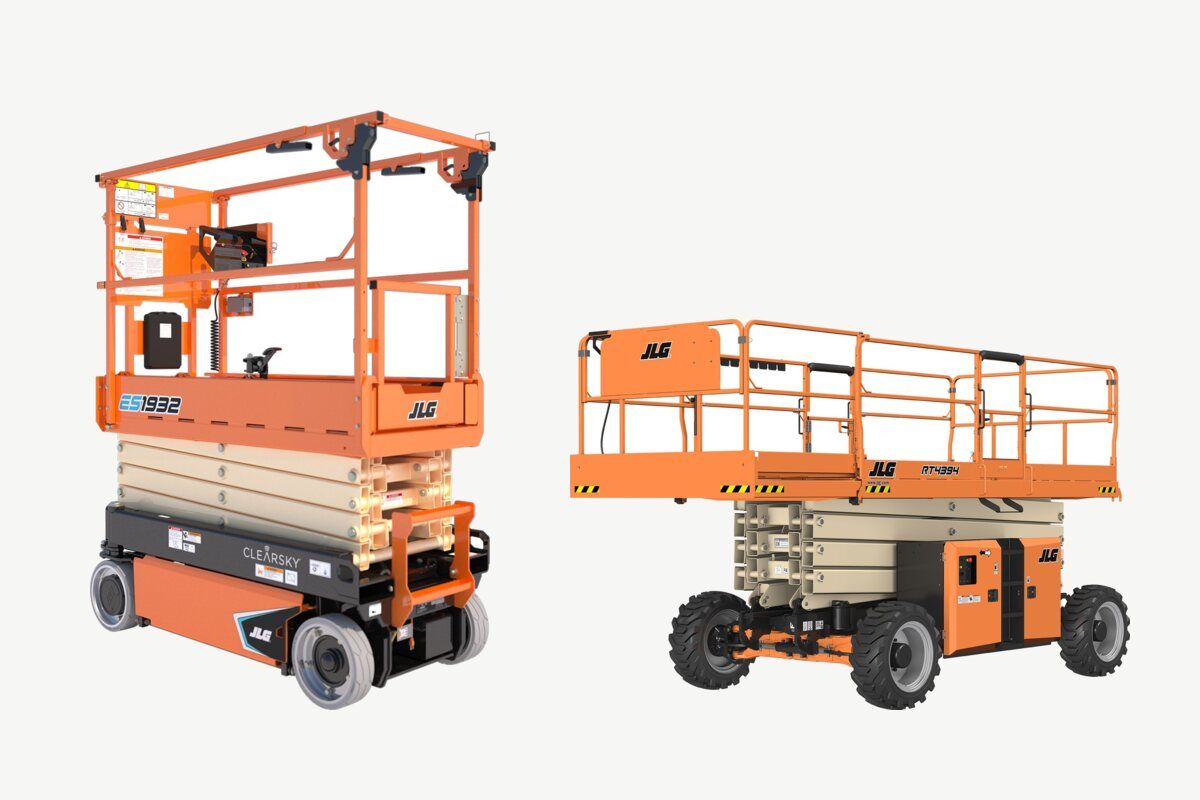
The platform rises vertically, pushed up by a stack of crossed "X" arms. It is the best-selling and most rented platform in the world because it is simple, stable and gives the most working area per euro: a wide deck for two or three people plus materials, often with an extension that slides out another metre.
- Working height: usually 6 to 18 m; the largest rough-terrain models exceed 20 m.
- Electric slab scissors: narrow (from 76 cm, they fit through a door), quiet, zero emissions, with non-marking tyres. For indoors and smooth floors.
- Rough terrain (RT): diesel, hybrid or new-generation electric, with 4x4 drive, site tyres and outriggers. For construction sites and uneven ground.
Best for: suspended ceilings, electrical and HVAC installation, painting walls and ceilings, steel erection, warehouses and industrial halls, low facades with no obstacles.
Limitation: it only goes straight up. If anything is between the ground and the work point, a scissor will not do.
Vertical mast lift
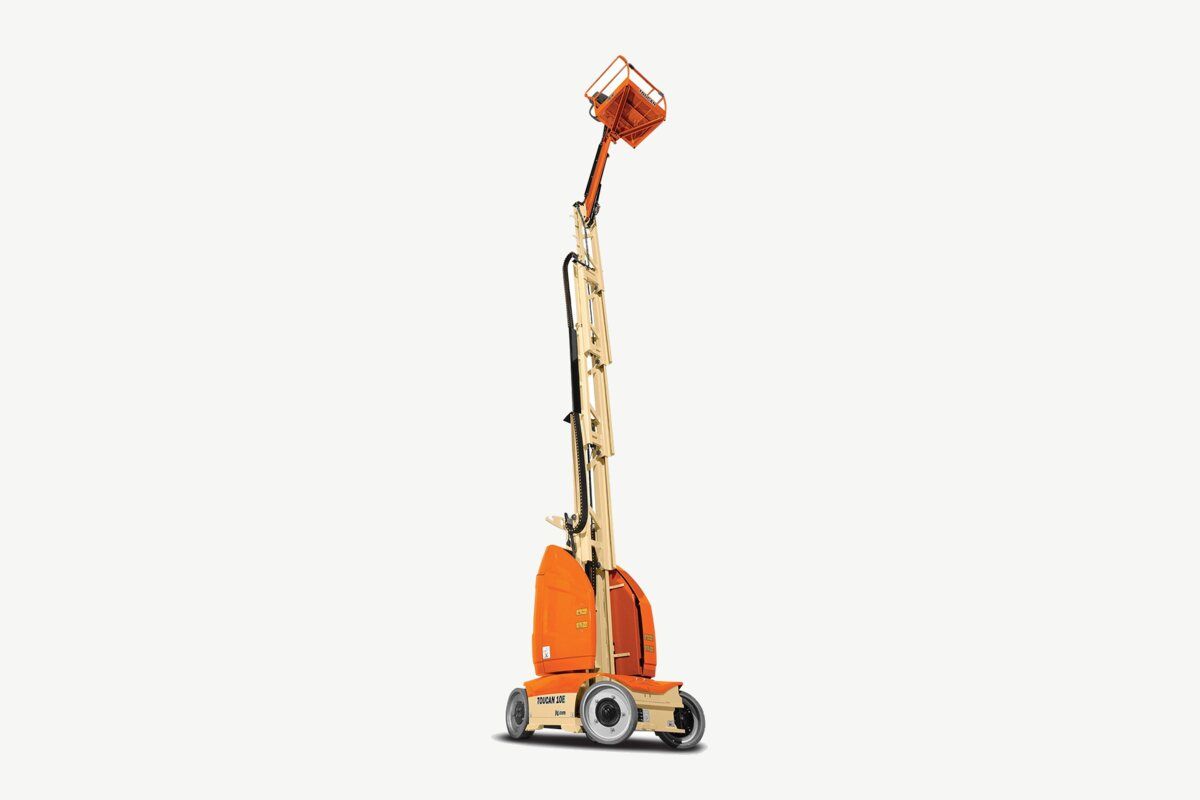
A telescopic mast that rises vertically, with a one-person basket. The simplest are pushed by hand (category 1a); self-propelled ones drive with the basket raised (3a). Some, like the JLG Toucan, have a small articulating jib on top that adds 2 to 3 metres of side reach.
- Working height: usually 6 to 12 m.
- Width: around 75 cm to 1 m; low weight, suited to raised floors, mezzanines and shops.
Best for: maintenance in warehouses and between racking, shops and shopping centres, hotels, theatres, relamping, quick one-person jobs without a stepladder.
Limitation: one person and little material; not for outdoor work in wind or on rough ground.
Articulating boom lift
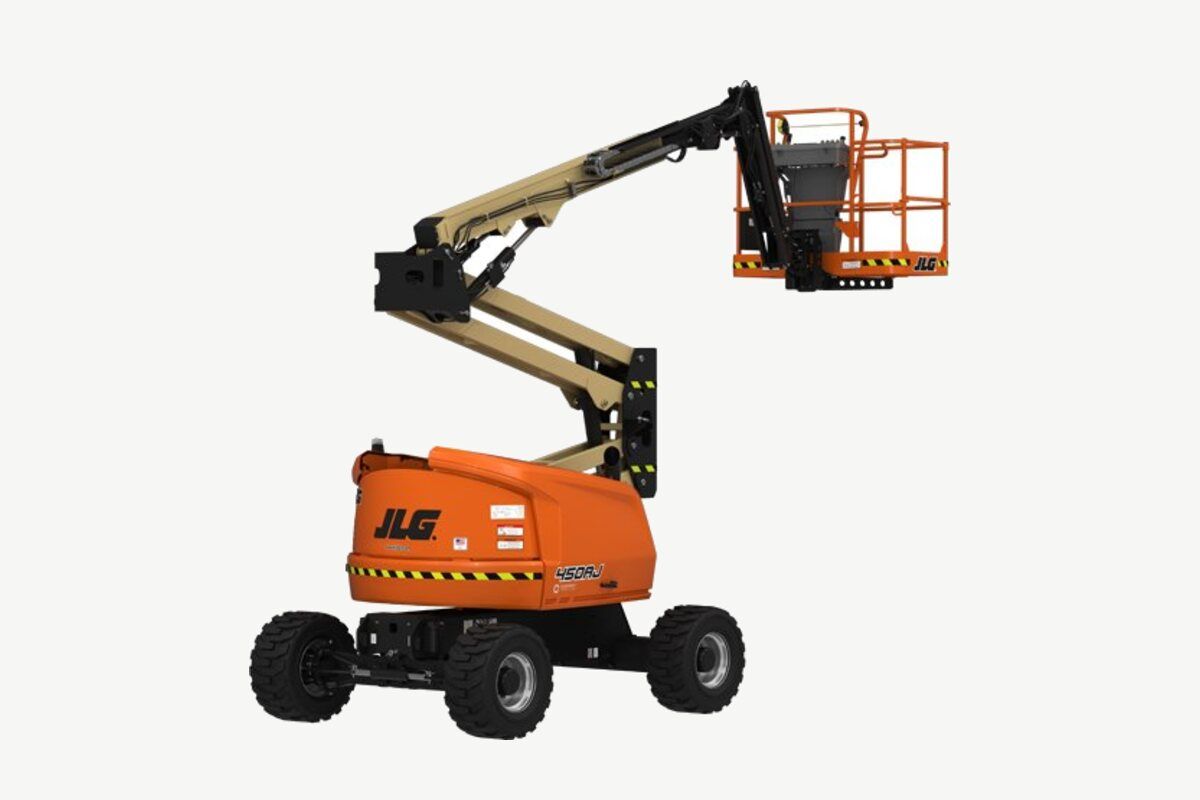
The boom is made of sections that fold like an elbow, mounted on a turntable that rotates 360°, often ending in a small jib that adjusts the basket angle. That lets it go up, over an obstacle and down the other side: it is the machine for awkward places.
- Working height: usually 10 to 26 m; large models reach 40 m.
- Horizontal outreach: 5 to 18 m, depending on the model.
- Versions: electric and hybrid for indoors and urban areas; 4x4 diesel for construction.
Best for: work over canopies, walls, machinery or vehicles; steel structures and industrial buildings; facades with balconies and recesses; industrial maintenance around pipework; street lighting and trees.
Limitation: more expensive and heavier than a scissor of the same height, and the basket is smaller (usually two people).
Telescopic boom lift
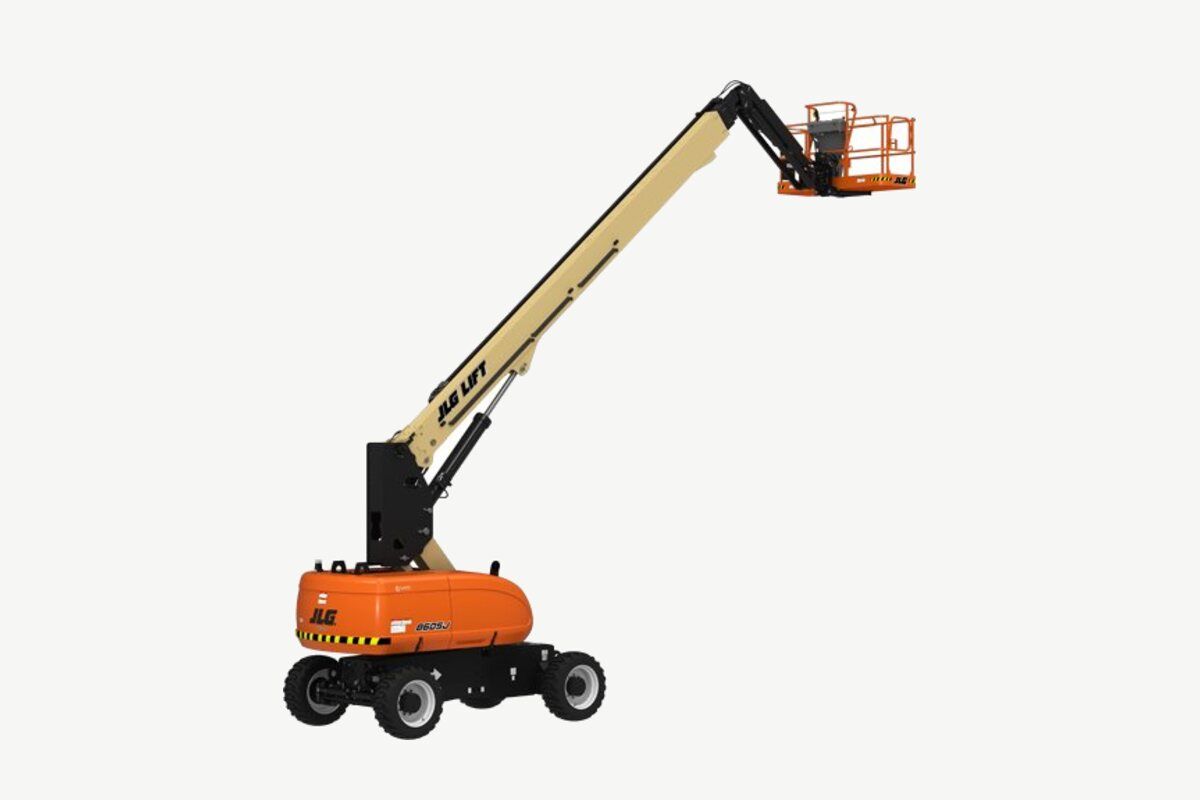
A straight boom made of sections that slide inside each other, like an antenna, on a rotating turntable. It does not work around obstacles like an articulating boom, but it goes higher and above all further out, and reaches the work point faster.
- Working height: usually 18 to 43 m; the largest on the market exceed 55 m.
- Horizontal outreach: 15 to over 25 m.
- Versions: almost always 4x4 diesel, with oscillating axles for site ground.
Best for: tall steel structures, bridges and viaducts, high facades set back from where the machine can stand, heavy industry, shipyards, work over trenches or water.
Limitation: needs a lot of space and ground that can take the weight (10 to over 20 tonnes); rarely goes indoors.
Spider (tracked) lift
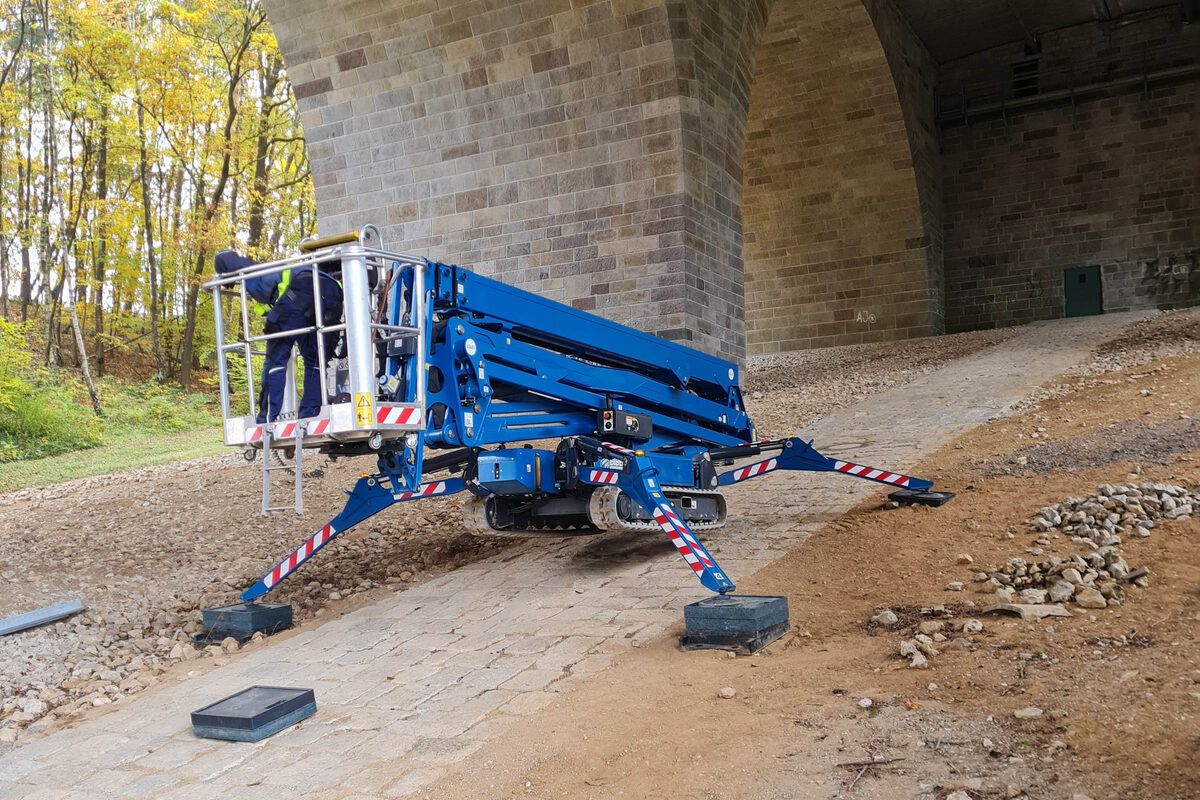
A boom platform (articulating or telescopic) mounted on tracks, which opens four spider-like outriggers to work. The trick is its stowed size: many fit through an 80 cm door and weigh under two tonnes, yet reach 20, 30 or even 50 m.
- Working height: usually 13 to 33 m; the largest exceed 50 m.
- Access: through doors, up ramps and stairs on tracks, onto gardens, courtyards and delicate floors without marking them.
- Power: petrol, diesel, electric or bi-energy (batteries indoors, engine outdoors).
Best for: atriums and churches, inner courtyards, gardens and slopes, trees, shopping-centre roofs, anywhere a wheeled platform will not fit or would sink.
Limitation: setting up and levelling the outriggers takes time, so it does not suit jobs that need repositioning every few minutes; it costs more per day than an articulating boom of the same height.
Truck- and van-mounted platform
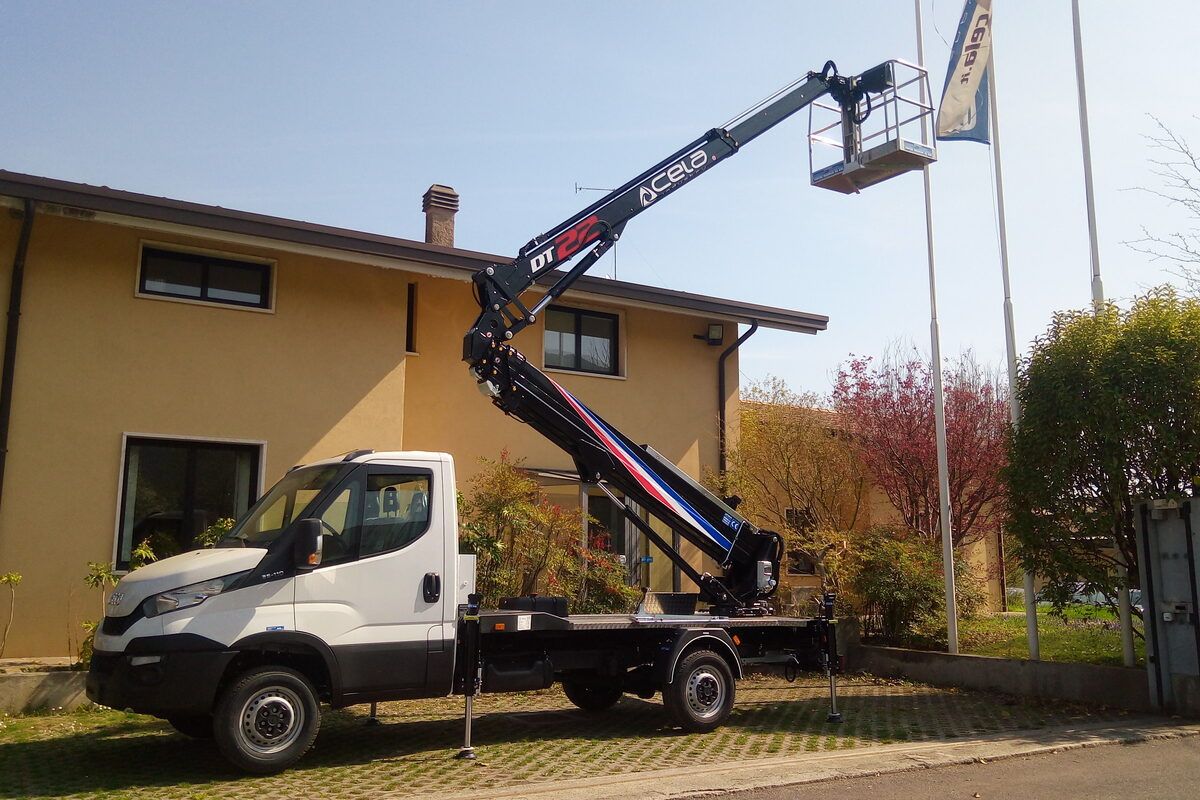
An articulating or telescopic boom mounted on a truck or van, with its own outriggers. It arrives at normal traffic speed, with no separate transport, and is ready in a few minutes.
- Working height: those on vans up to 3.5 t (car licence) usually reach 12 to 21 m; on trucks, 25 to over 70 m.
- Variant: trailer-mounted platforms, cheaper, towed by a car and reaching 12 to 20 m.
Best for: street lighting, signs and traffic lights, telecom and power networks, facades and eaves on the street, tree pruning, jobs at several locations in one day.
Limitation: works stationary, from the public road (often requiring an occupation permit and traffic signage) and does not go inside buildings.
Telehandler
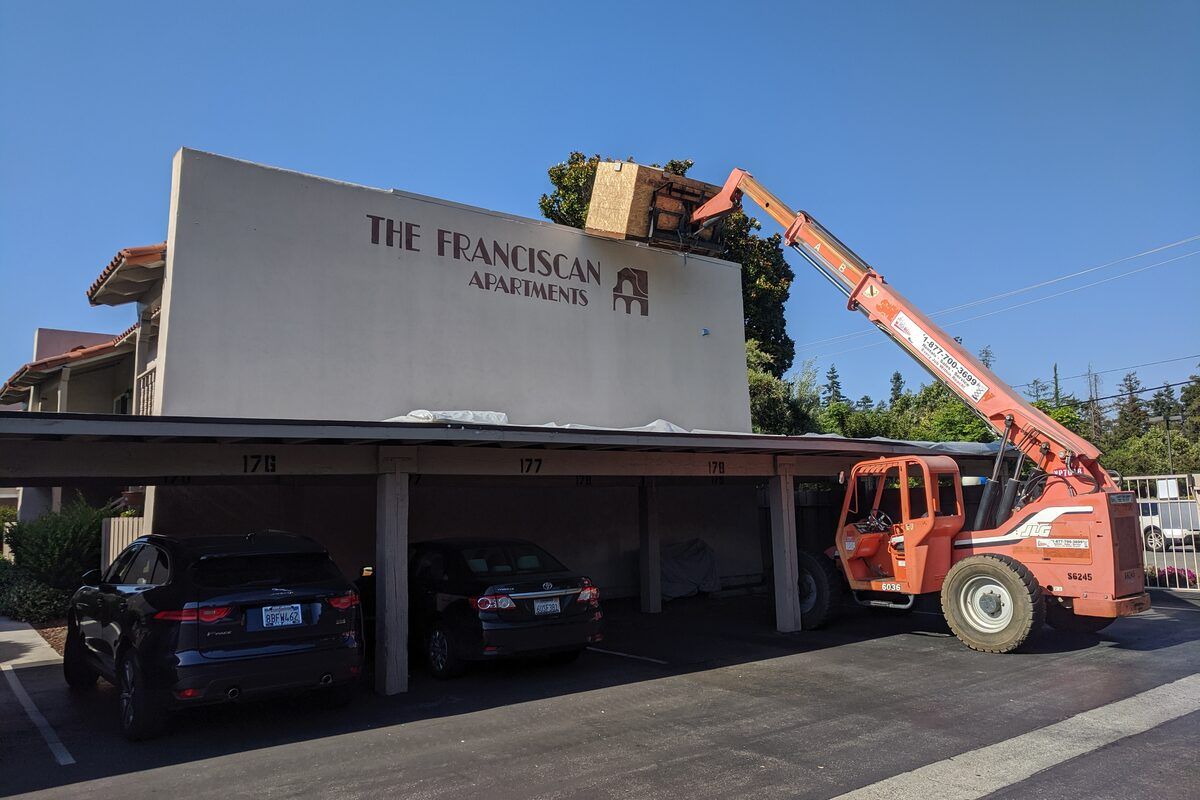
It appears in every rental list next to the platforms, but it is a different family: a forklift with a telescopic boom, built to lift and place loads (pallets, bricks, beams, bulk bags) at height and at distance. Fixed ones usually reach 6 to 18 m and 2.5 to 5 tonnes; rotating ones, with outriggers and a slewing turret, exceed 30 m and work almost like a small crane.
Can it lift people? Only with a work basket approved for that model, recognised by the machine's safety system, which automatically restricts its functions. Lifting people on pallets, on the forks or in an improvised cage is prohibited: the law only allows workers to be lifted with equipment designed for that purpose (Decree-Law 50/2005, Article 29) and it is one of the most frequent causes of serious accidents.
Best for: new construction and agriculture, unloading and placing materials at height, roof assembly; with a basket, occasional work at height on the same site.
Electric, diesel or hybrid?
- Electric: no emissions or noise, in practice mandatory indoors, in hospitals, food factories and shopping centres. Runs a full shift; needs charging overnight.
- Diesel: power and traction for construction, slopes and long days. Cannot work in enclosed spaces.
- Hybrid or bi-energy: batteries indoors and an engine outdoors or to recharge. Makes sense when the same machine goes in and out of buildings.
Low-emission zones in cities and sites with sustainability targets are pushing articulating booms and rough-terrain scissors towards electric versions; it is worth asking for them even outdoors.
Quick guide: which to choose
- Is the work straight up, with nothing above or in front? Scissor (several people and materials) or vertical mast (one person, tight space).
- Is there an obstacle between the machine and the work point? Articulating boom.
- Is the work point far out horizontally or above 25 m? Telescopic boom.
- Does the machine need to go through a door, climb steps or drive on grass? Spider lift.
- Are these short jobs on the street, at several locations? Truck- or van-mounted platform.
- Do you need to lift materials, not people? Telehandler.
Before asking for a quote, have ready: the height to the work point, how far horizontally the machine will stand, the type of ground and the width of the access, whether it is indoors or outdoors, how many people go in the basket and how long the job lasts. With these six facts, any rental company can propose the right machine first time.
Buy or rent
For occasional jobs, renting is almost always cheaper: see our directory of aerial platform rental companies, with indicative prices by type. If you use a platform several weeks a year, owning one, new or used, pays for itself in two or three years. See the new JLG platforms, the used machines and our guide to what to check before buying a used platform. Whichever you choose, the machine needs mandatory periodic inspections and the operator needs proper training.
Sources and legislation
- EN 280-1:2022 — Plataformas elevatórias móveis de pessoal: cálculo, estabilidade, construção
- ISO 16368:2024 — Mobile elevating work platforms: design, calculations, safety requirements and test methods
- IPAF — PAL Card e categorias de máquinas (1a, 1b, 3a, 3b)
- Decreto-Lei n.º 50/2005, de 25 de fevereiro — Diário da República
- JLG — Gama de plataformas de tesoura, verticais, articuladas e telescópicas
- Foto da plataforma aranha: ParadoxxX8, CC BY-SA 4.0 (Wikimedia Commons)
- Foto da plataforma sobre carrinha: Celaplatform, CC BY-SA 4.0 (Wikimedia Commons)
- Foto do manipulador telescópico: Grendelkhan, CC BY-SA 4.0 (Wikimedia Commons)
This guide is for information only and does not replace the legislation in force or legal advice. When in doubt, contact the Portuguese labour authority (ACT).