
Published: 22 September 2026Last reviewed: 22 September 20268 min read
Looking to rent scaffolding?Use our scaffolding rental directory: 61 companies across Portugal, with a map, a filter by scaffold type, erection and indicative prices.See scaffolding companiesIn short: to paint, render or insulate a regular facade, frame scaffolding is the cheapest. When the shape is irregular, the height great or the load heavy, it is system scaffolding. For indoor work up to about 12 m, an aluminium mobile tower goes up in minutes. On tall buildings with light work, a suspended platform avoids taking over the pavement; for heavy, long jobs on tall facades, a mast climbing work platform. Shoring is not for working on: it holds up slabs and structures. All of them, except small towers, are erected by trained crews and inspected before use.
What sets the types apart
Three things: how the structure connects (prefabricated frames, tubes with nodes, or no structure at all for platforms that climb), what load it takes per square metre, and whether it stands on the ground, is tied to the facade or hangs from the roof. Each family has its European standard: EN 12810 and EN 12811 for frame and system scaffolds, EN 1004 for mobile towers, EN 1808 for suspended platforms, EN 1495 for mast climbing platforms, and EN 1065 and EN 12812 for props and falsework.
The standards define load classes 1 to 6. Inspection and cleaning need only the low classes (75 kg/m²); painting and rendering use class 3 (200 kg/m²); masonry, stone and storing materials on the deck need classes 4 to 6 (300 to 600 kg/m²). Tell the scaffolding company what you will be doing up there, not just the height.
Frame (facade) scaffolding
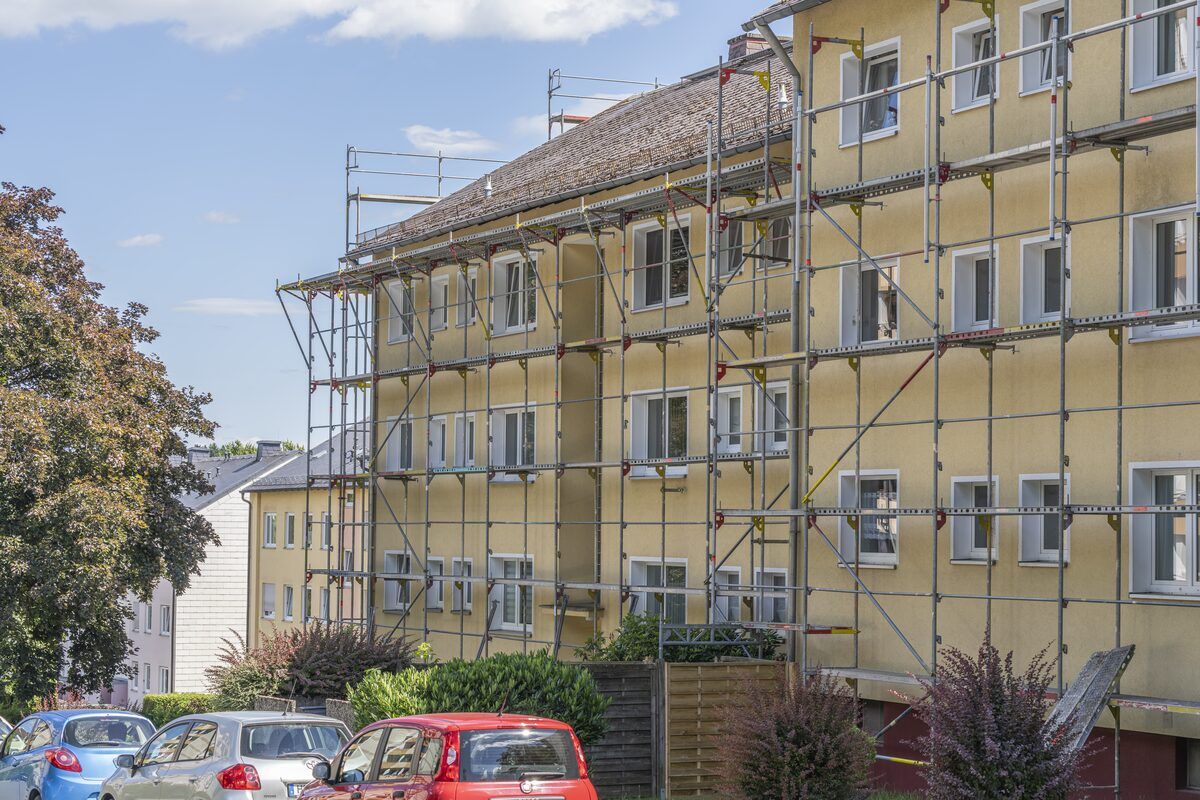
Prefabricated steel frames shaped like an "H" or a ladder, slotted together along the facade, with 0.7 to 1 m wide decks, guardrails, toe boards and internal ladders between levels. It is the scaffold on most buildings under renovation in Portugal, because it goes up fast and is the cheapest per square metre.
- Height: usually up to 30 m in standard configurations; above that, or with netting, sheeting and advertising banners (which greatly increase wind load), it needs a design and calculation.
- Fixing: anchored to the facade with ties at regular intervals; standing on adjustable base plates and sole boards.
- Usual protection: netting or sheeting against falling materials and dust, a fan over the pavement, night lighting.
Best for: painting and rendering facades, external thermal insulation (ETICS), replacing windows, repairing balconies, eaves and roofs, building refurbishment.
Limitation: works best on flat, regular facades; towers, domes, curves and large overhangs call for system scaffolding.
System (multidirectional) scaffolding
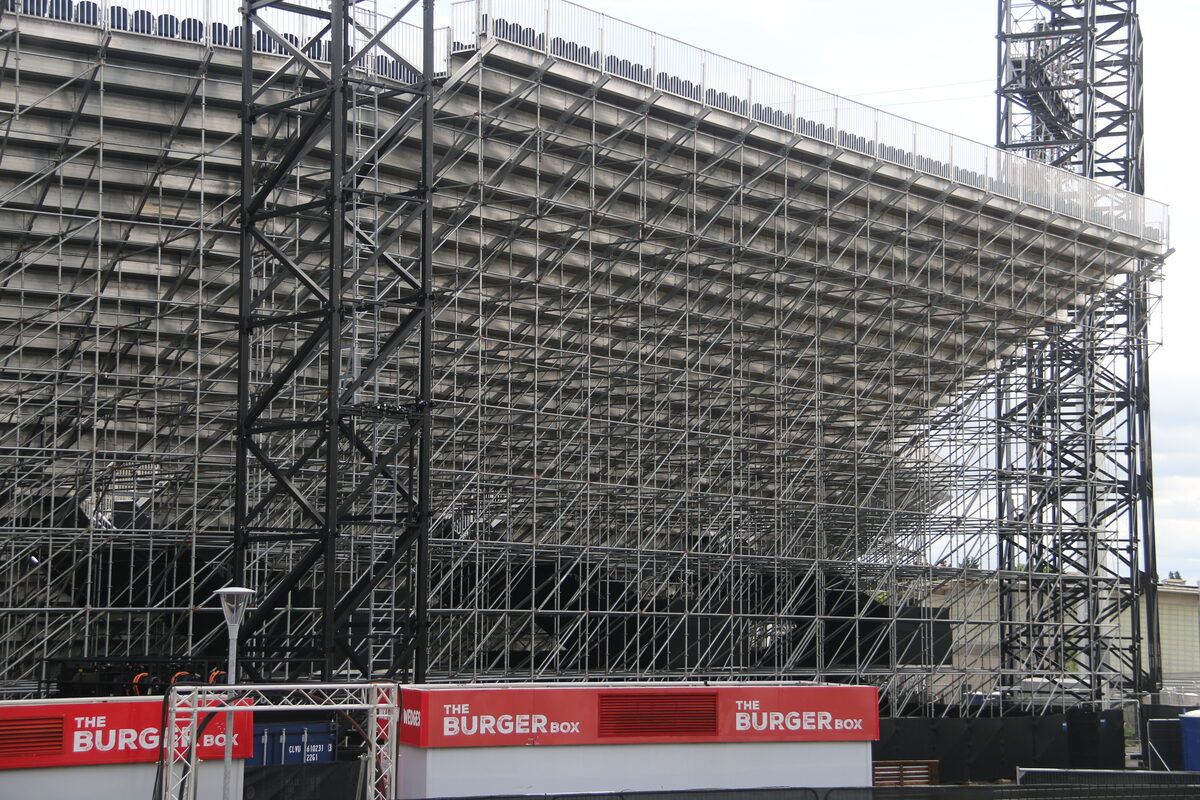
A modular system of standards with rosettes (perforated discs) every half metre, into which ledgers and braces lock at various angles. The best-known brands are Layher Allround, Peri Up and "ringlock"-type systems. It is the Lego of scaffolding: it adapts to any shape, great heights and heavy loads.
- Height and load: far beyond frame scaffolding, always with a design. It supports working decks, access stairs, bridges and cantilevers.
- Cost: more expensive per square metre and slower to erect, but it solves what frame scaffolding cannot.
Best for: churches, towers and monuments, factories, refineries and power plants, boilers and tanks, temporary roofs, grandstands, stages and screen structures, site access stairs.
Limitation: needs experienced erectors and a scaffold design; for a simple facade you would be overpaying.
Aluminium mobile tower
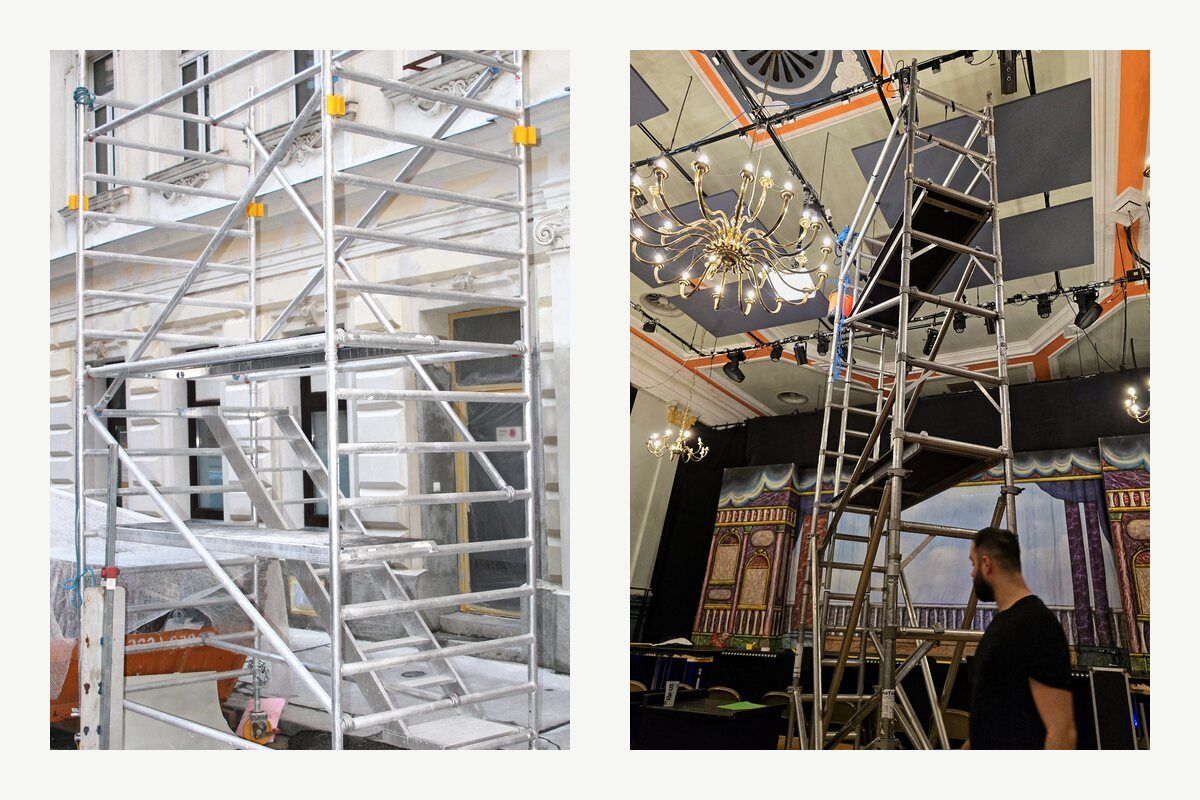
A light tower of aluminium frames on braked castors, with platforms and internal or inclined ladders, and side stabilisers. It goes up without tools in 15 to 30 minutes and is moved along the work, with nobody on it.
- Working height: usually 4 to 12 m indoors; outdoors the maximum is lower because of wind. Narrow versions (75 cm) fit through doors.
- Rental: by the day or week, with delivery; often without assembly, because the user erects it following the manual.
Best for: painting ceilings and tall walls, suspended ceilings, lighting and HVAC, maintenance in warehouses, shops, sports halls and theatres, cleaning at height.
Limitation: only on flat, firm floors; never moved with people or materials on it, and outdoors above a few metres it must be tied in.
Suspended platform (cradle)
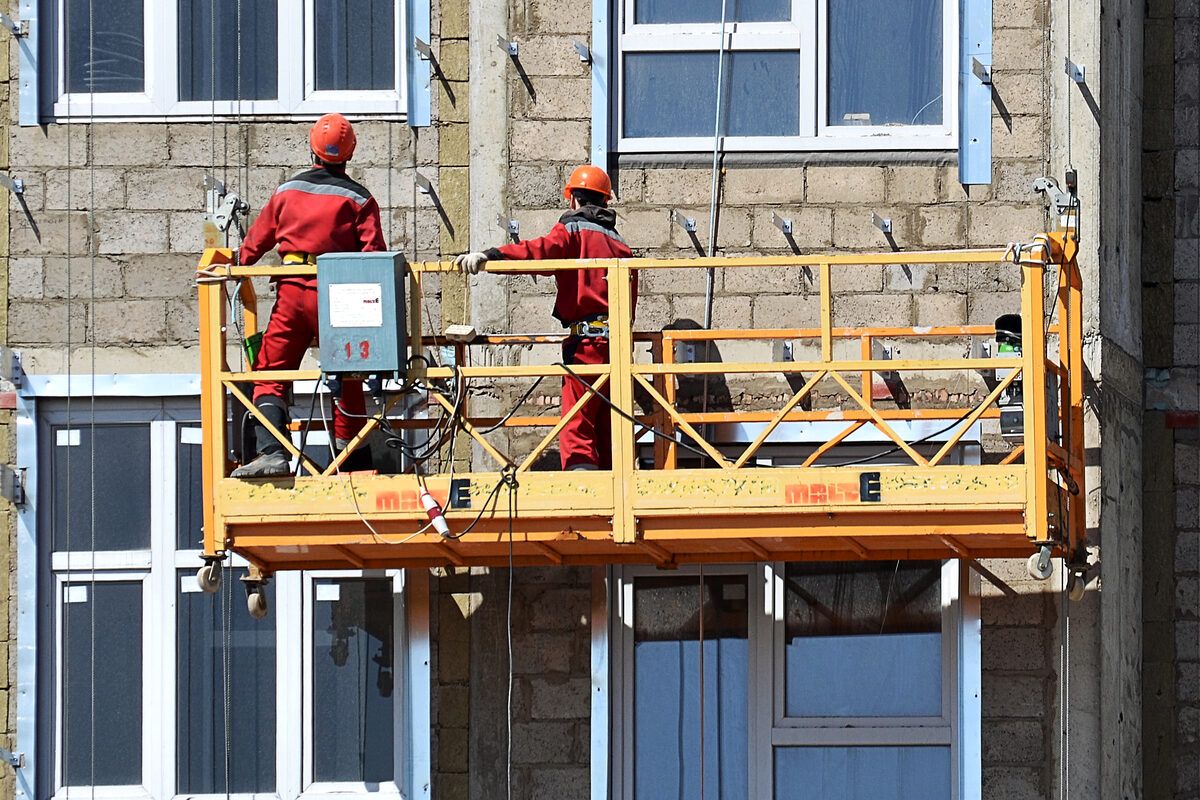
A narrow platform hung on two steel cables from counterweighted beams installed on the roof, with electric hoists that move it up and down the facade. Each working cable has an independent safety cable with a fall-arrest device. Newer tall buildings often have a permanent system (gondola) for window cleaning.
- Height: practically unlimited; what matters is cable length and roof strength.
- Width: modules of 2 to 10 m; loads of 200 to 600 kg depending on the model.
Best for: window and facade cleaning, painting tall buildings and towers, spot repairs to cladding and joints, facade inspections, installing advertising.
Limitation: works one narrow strip at a time and is not for heavy loads; needs somewhere to fix the roof beams and low wind.
Mast climbing work platform
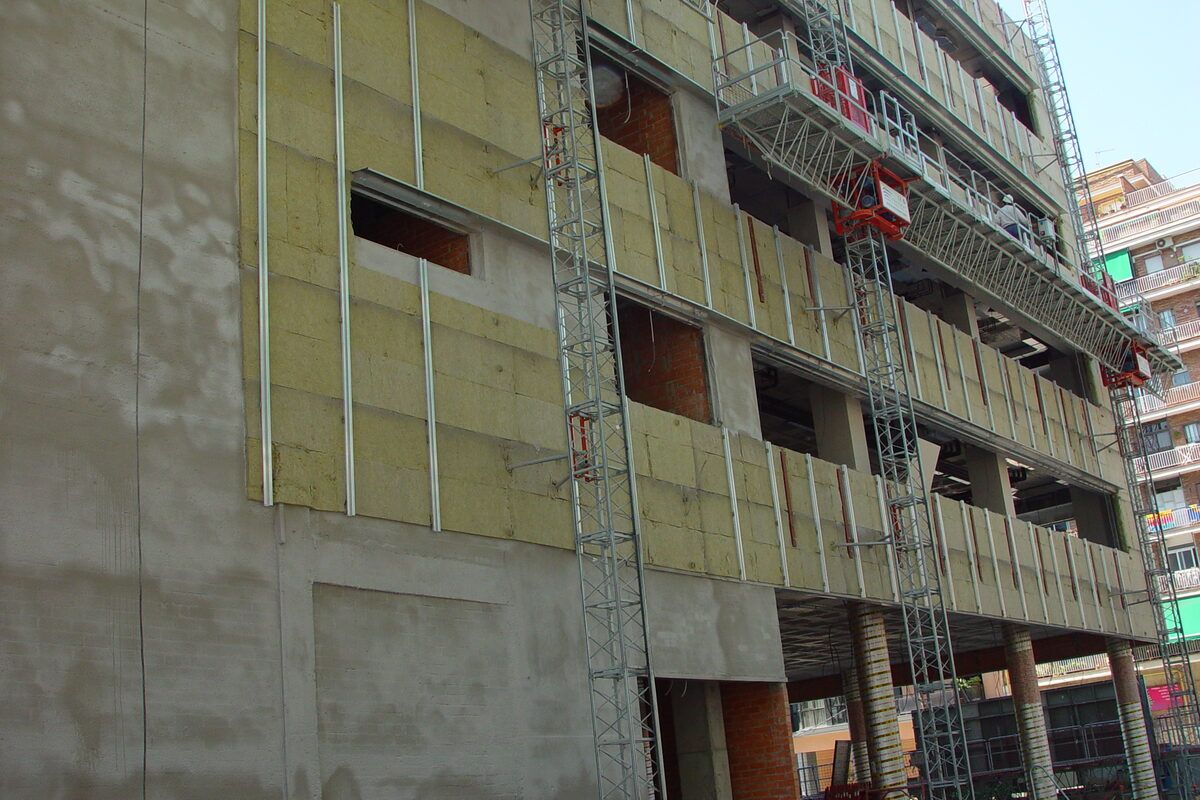
A wide platform that climbs and descends, driven by electric motors, on one or two masts anchored to the facade. It carries whole crews and heavy loads (often over 1,000 kg, and over 3,000 kg on large models), with widths of up to 30 m on twin masts.
- Height: 100 m or more, with ties every few metres.
- Advantage over scaffolding: faster to install on tall buildings, puts the crew and materials at exactly the right height and takes up less pavement.
Best for: ventilated facades and ETICS on tall buildings, stone, panel and ceramic cladding, replacing windows across a whole facade, high-rise new build.
Limitation: the cost and installation only pay off on long jobs and large facades; it does not work around balconies and projections as well as scaffolding.
Shoring and falsework
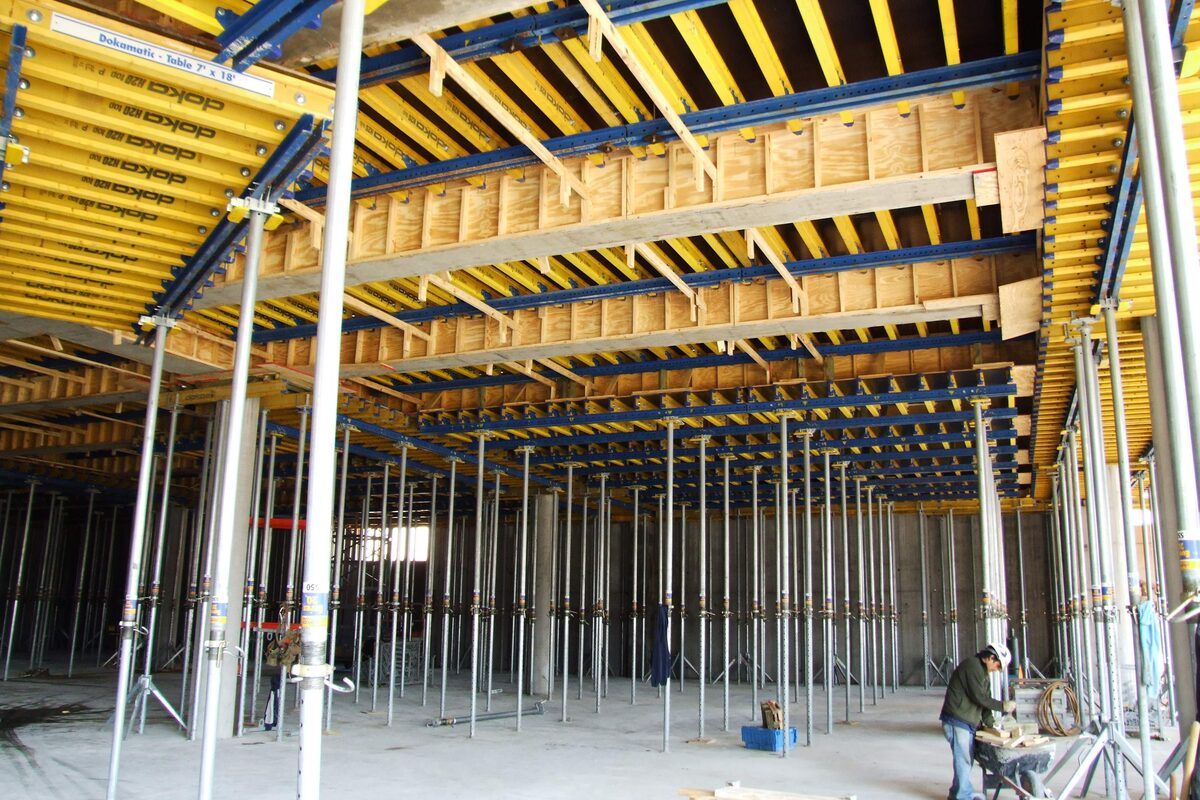
Not a scaffold to work on, but every scaffolding company offers it: adjustable steel props, load towers and falsework that support slabs, beams and formwork during concrete pours, or existing structures during strengthening and partial demolition.
- Props: adjustable, usually 2 to 5 m, rented by the unit.
- Load towers and falsework: for heavy loads and great heights, with a design, often rented together with the formwork.
Best for: reinforced concrete new build, structural strengthening of old buildings, bridges and civil structures, shoring trenches and facades during refurbishment.
Limitation: sizing is always an engineering task: the number and position of props come from the design, not from guesswork.
Assembly, permits and safety
A badly erected scaffold is one of the main causes of falls on site, which is why the law is specific. Decree-Law 50/2005 requires:
- Erection by competent people: assembly, dismantling and any alteration are carried out under the direction of a competent person and by workers with specific training (Article 40).
- Plan and calculation: an assembly, use and dismantling plan, and a strength and stability calculation whenever the configuration is not covered by the manufacturer's calculation note (Article 40).
- Stability: supports that cannot slip, ground with sufficient capacity and, on towers, locked wheels during work (Article 41).
- Complete decks: boards fixed in place, no dangerous gaps, and signage on parts not yet ready for use (Article 42).
- Inspection: before first use, after alterations or bad weather, and periodically, with a record. See our guide to mandatory inspections of work equipment.
On construction sites Decree-Law 273/2003 also applies: the scaffold is part of the health and safety plan. Whenever it takes up pavement or road space, a public space occupation permit from the municipality is required, with signage, a protected pedestrian route and often a protective fan. Most scaffolding companies handle the permit and include erection in the quote.
Scaffolding or aerial platform?
- Scaffolding: long, continuous work across a whole facade, several crews at once, heavy materials following the work, masonry and cladding.
- Aerial platform: one-off or quick jobs, work at several different points, heights that would need a designed scaffold, places where the pavement cannot be occupied for weeks.
On many jobs the answer is both: scaffolding for the facade, a platform for the roof or finishing details. See our guide to the types of aerial work platforms and the directories of scaffolding rental and aerial platform rental companies, with indicative prices.
Before asking a scaffolding company for a quote, prepare: the width and height of the facade (in metres), photos, the type of work and the materials that will be on the deck, the timeframe, whether the scaffold occupies pavement or road, and any obstacles (balconies, basements, power lines, trees).
Sources and legislation
- Decreto-Lei n.º 50/2005, de 25 de fevereiro (artigos 40.º a 42.º, andaimes) — Diário da República
- Decreto-Lei n.º 50/2005 — texto articulado (PGDL)
- Decreto-Lei n.º 273/2003, de 29 de outubro — estaleiros temporários ou móveis
- EN 12811-1 — Equipamento para trabalhos temporários: andaimes, requisitos de desempenho e projeto
- EN 12810-1 — Andaimes de fachada de componentes pré-fabricados
- EN 1004-1:2020 — Torres móveis de acesso e de trabalho
- EN 12812:2008 — Cimbres: requisitos de desempenho e projeto
- ACT — Autoridade para as Condições do Trabalho
- Foto do andaime de fachada: PantheraLeo1359531, CC BY 4.0 (Wikimedia Commons)
- Foto do andaime multidirecional: Basil Jean, CC BY-SA 4.0 (Wikimedia Commons)
- Fotos das torres móveis: Leo Miregalitheo e Acabashi, CC BY-SA 4.0 (Wikimedia Commons)
- Foto do bailéu: Dmitry Ivanov, CC BY-SA 3.0 (Wikimedia Commons)
- Foto da plataforma de cremalheira: Engoman23, domínio público (Wikimedia Commons)
- Foto do escoramento: Vinhtantran, CC BY 3.0 (Wikimedia Commons)
This guide is for information only and does not replace the legislation in force or legal advice. When in doubt, contact the Portuguese labour authority (ACT).